Matrix One>Guides>Medical Device Software Safety Classification

Free infographic

Medical Device Software Safety Classification

Not all software is equal. IEC 62304 defines 3 software safety classes based on risk of harm resulting from a hazardous situation.

Last updated
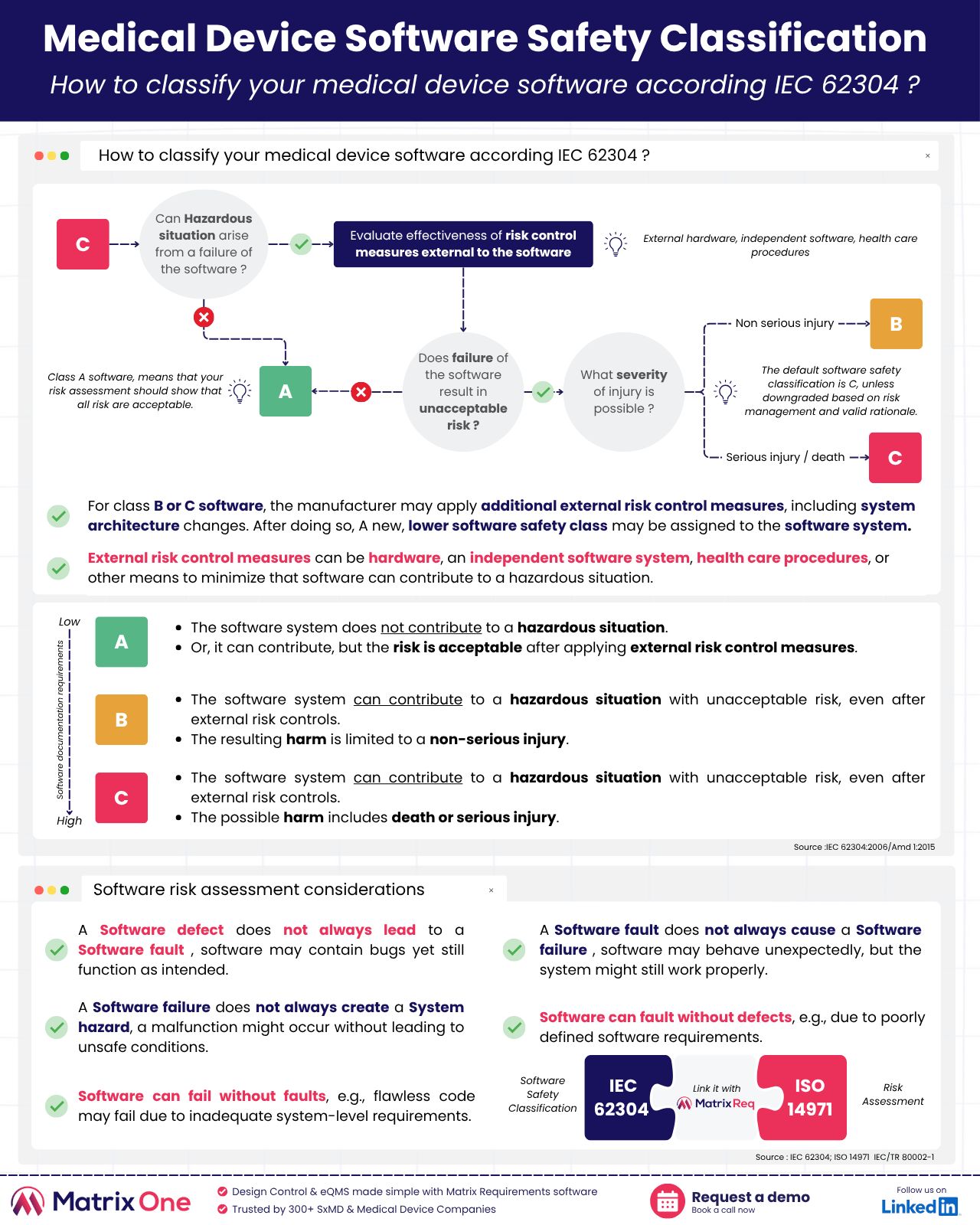
Download the free infographic, no form required.

What's inside

How to classify your medical device software per IEC 62304?

Not all software is equal.

IEC 62304 defines 3 software safety classes based on risk of harm resulting from a hazardous situation.

Here’s a quick reminder:

  • Class A: The software doesn’t lead to a hazardous situation. Or, if it does, the risk is low enough to be considered acceptable (after applying external RCM).

  • Class B: The software might cause a hazardous situation. But the most it would lead to is a non-serious injury.

  • Class C: The same situation could result in serious injury or death. Even when external risk control measures are applied.

Written by
Abbas Dhilawala
CTO

Abbas Dhilawala has spent 20 years writing software for an industry where mistakes have real consequences: medical devices and life sciences. That context tends to make you think differently about engineering, and about what it means to ship something. In 2016, he co-founded the company behind what is now Matrix Connect, on a straightforward premise: medical device companies needed a better way to capture, store, and act on device data in the cloud. What followed was a decade of building from scratch, earning HITRUST and ISO 13485 certifications, and eventually Matrix One acquired the company in 2025. He's now CTO at Matrix One, where he oversees the technical direction across their product portfolio. The current focus is rebuilding core products for the cloud and shipping AI features. He also runs a global engineering team, which he considers some of the most interesting work he's done.

View profile →
Matrix One software are trusted by over 300 Medical Device Companies